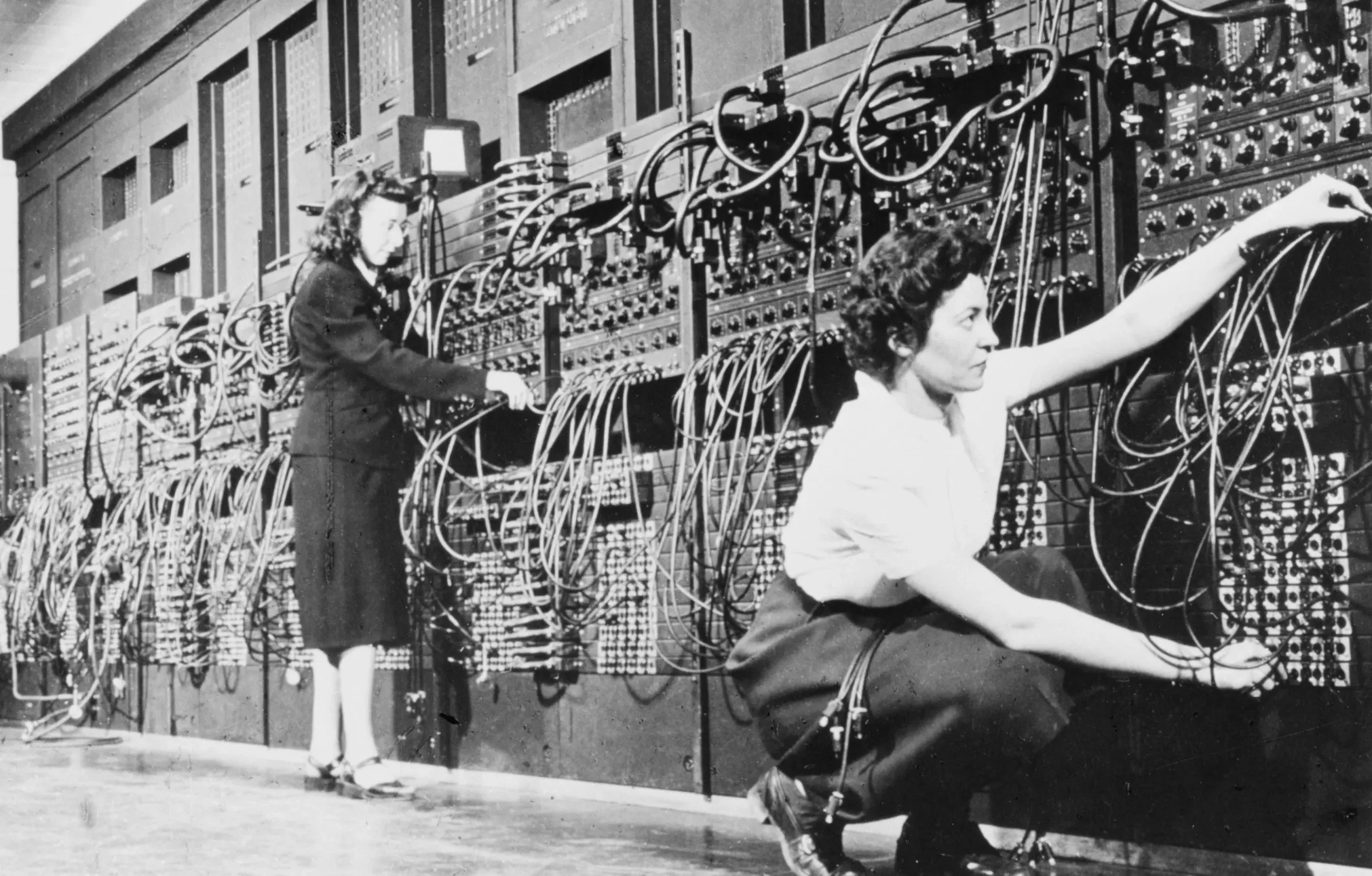
Imagine needing an entire room just to run a single program. No screen, no keyboard, no mouse—just rows of blinking lights, spinning tapes, and the constant hum of machinery. This was the reality of computing in the 1940s and 1950s, a time when computers were not personal devices but monumental engineering achievements.
The Giants of Early Computing
In the early days, computers like ENIAC and Harvard Mark I were built using thousands of vacuum tubes and mechanical components. These machines were enormous, often occupying entire rooms and consuming massive amounts of electricity. They weren’t designed for everyday use, but for solving complex military calculations, scientific problems, and data processing tasks.
Operating these machines required a team of highly skilled individuals. There were no simple interfaces—programming involved physically rewiring panels or feeding punch cards into the system. A single mistake could mean hours, or even days, of troubleshooting.
Programming Without Screens
Unlike today’s developers who rely on IDEs and real-time feedback, early programmers worked blindly. They wrote instructions on punch cards, fed them into the machine, and waited for results. If something went wrong, there were no error messages—just incorrect output or no output at all.
Debugging was a slow and meticulous process. Engineers had to manually trace circuits, inspect hardware, and review sequences of instructions. It wasn’t uncommon for a simple issue to take hours to locate.
The Rise of Innovation
Despite these limitations, innovation thrived. These early machines laid the foundation for everything we use today—from smartphones to cloud computing. Concepts like memory storage, binary operations, and algorithmic processing were born during this era.
As technology evolved, vacuum tubes were replaced by transistors, which were smaller, faster, and more reliable. This transition marked the beginning of more compact computers and eventually led to the development of microprocessors.
From Exclusive to Everyday
What was once accessible only to governments and large institutions is now in everyone’s pocket. Modern computers are millions of times more powerful than their room-sized ancestors, yet significantly smaller and more efficient.
This transformation didn’t happen overnight—it was the result of decades of experimentation, failure, and relentless curiosity.
Lessons from the Past
The story of early computing reminds us that technology is built step by step. Behind every modern convenience lies a history of complexity and perseverance. It also highlights an important mindset: limitations often spark creativity.
Today’s developers may not deal with vacuum tubes or punch cards, but the essence of problem-solving remains the same. Whether it's debugging code or designing systems, the goal is still to build something reliable, efficient, and impactful.
And perhaps the next time your code doesn’t run as expected, remember—at least you don’t need an entire room to fix it.